Showing posts with label Conflict. Show all posts

Monday, November 14, 2011

How We Communicate is Important

When  was in Kiev (yes, I know you know I went to the conference, but I WAS in Kiev when this happened) I kept thinking of you, the readers of my blog and how I will post this and post that. One thing I thought about was this advertisement clip. The post was clear to me, the subject, the connection to Theory of Constraints, everything. But by the time I got around to digging it up I could not remember what got me going in the first place. It still feels right, though.

I find this clip has a very powerful message about communication and conflict situations. I suggest you watch it first with the audio OFF! Now before you run it again with the audio on, let me tell you these two actresses are doing a great job here. Of course there is a catch, but I won't tell you what it is, turn on the sound and hear for yourself.

{BTW, I noticed a lot of readers view this blog through a translating site, so if English is not for your ears, I've added a transcript below for the translating tool, as the text is relevant}


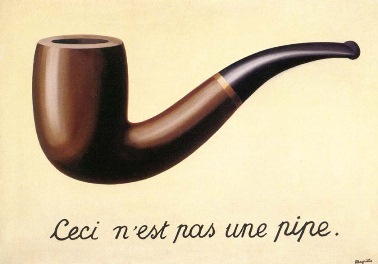
Here's what I see here, when we find ourselves conflicting with others we many times get into a "fight" mode. Think back about arguments and fights you've had over the years. As soon as the disagreement starts we become entrenched in our own corner, defending our needs or wants or point of view with all our might. This is greatly intensified if, coming into the 'discussion', we predict the other side will not react as planned. We are armed and ready and so we are ready to misinterpret any of her reactions as a declaration of war. Now, as soon as we go into "fight" mode we turn off "communication" mode and thus we stop listening to others and start listening only to our inner voice. We hear only those things that can serve as "ammunition" in the next "round". Do you remember this Magritte painting?


Well, can you agree that an argument is not communication, then?

As stated here, the Theory of Constraints requires change and it requires cooperation from others. To get others to cooperate with the change offered communication must be used to get buy in and commitment. You can't argue your way into convincing them that you understand and that you have a valuable offer.

Thursday, November 10, 2011

You Need a Conflict to Evaporate a Cloud


Earlier today, for some reason, I remembered my first (and last, as of today) try to get my boys (Then 9 and 6) to use the EC tool. Even tough we managed to reach a solution it was a total failure as the solution worked just once, and probably because I made it work. Today as this experience popped into my mind I realized what went wrong.
Here is the story, in short: Once a week, early in the morning, the boys get a magazine in the mail box. Every week they would rush to get it and then start quibbling right away over who gets to read it first, while getting ready for school and on the drive there. So on the week I was at Goldratt House doing the "TOC for the Ever Flourishing Organization" workshop, I decided to use the tools and help them solve this conflict. I sat them down, listened to each and tried to write the cloud. We came out with something lame. The wants were clear - each wanted to be first. The needs they stated were, at least to me, not relevant and somewhat foolish. The real issue was the common goal, I had to force one on them - this should have been a huge blinking warning sign for me, but I was a Mama with a mission, I ignored.
Well, thinking it over I realized that I was trying to draw a cloud where there was no conflict. They had no problem with the situation, perversely enough (in my eyes, totally natural by any other point of view) they wanted those quarrels to go on. The problem was, of course, mine and the conflict was, sure enough, between me, wanting peace and quite as I drive them to school and them, wanting to keep up the good fun of having the other blow up.
Looking at the situation from this angle the first thing to pop up is the common goal (easy after reading Lisa Scheinkopf's example about her daughters). It was "make sure Mom doesn't lose her temper". The wants I already know and there is really no point in trying to figure out the needs - they are no longer fighting over this....

Friday, October 7, 2011

Shop floor insights – winners and losers

One of the pillars of TOC is the "win-win" concept, which states that for every conflict a solution in which nobody loses is feasible (Please see the comment I got on this from Avraham Mordoch below). This stems from the very basic assumption or axiom that win-lose situations can't exist in real life. Compromises can exist only when the compromise is acceptable for the compromiser and in most cases both sides need to compromise to make the situation acceptable. When a compromise can't be achieved there are only two options: either everybody wins or everybody loses. No other option exists.
This axiom should be taken into consideration when creating any kind of incentive pay scheme. If your scheme is based on "one man's gain is another man's pain" you are setting yourself up for disharmony and loss.
So what happens when people get paid a commission based on their sales? As far as I could see we got less service to customers as it is considered bad manners to step into another worker's sale and we got quarrels when such step in accidentally happened. Sometimes even heated quarrels. Between people who have to work together day in and day out. When I asked about this I was told that when we compete against each other (the data was easily reviewed at all times) we become more motivated. If we see the other sales clerk has more sales, we'll push harder, if we see the other store has more sales – we'll push harder. But, as far as my logic goes – people buy what they want. Sales clerks have an impact, sure, but it is limited. If someone has lit a fire under me, the natural reaction will either be to push hard, which will turn off the buyers, or clam up, which will reduce service to the buyers.
I have to say that I find I get the best service at restaurants that use a tipping pool – all tips go into the pool and are then split between the entire shift staff. This means all the service staff has a vested interest in my pleasure and cooperation is beneficial for all. I am sure that the team members know who is free riding on them and quickly straighten such abusers. When tips are personal, service can still be great, but it is at risk.
My suggestion to that retail chain - pay comission based on store performance, then you'll have a team working together.

Monday, July 11, 2011

Satisficing

Theory of Constraint talks a lot about avoiding local optima, about maximizing the system and not its parts. This leads to road runner ethics, to making sure we are not trying to be more accurate than the noise in the system and so forth. The Theory of Constraints solutions tell us what to do at a good enough granularity. The rules are simple. Don't protect every step, protect the system by protecting the constraint, maintain flow. The tools are there. DBR and sDBR, CCPM, Logistics. So what's the problem?

The problem is there is still a void, although it seems to be just a verbal one. If we are not optimizing, if we are not "doing the best we can", than what are we doing? We can't just brush this off as being "just a verbal thing, just definitions", definitions are the starting point of clear thinking, as Dr Goldtratt taught us repeatedly.

There is another reason that makes this important. While the human logic can accept fuzziness, our subconsciousness can't, and that's where it counts the most, since most of our decision making is actually done there, at the most instinctive level. There are no voids in the subconscious mind and there are no gray areas. Like Master Yoda said in one of the Star War movies: "Do, or do not, there is not try". That's your subconscious mind for you.

So, for our subconscious mind not "doing the best we can" is, actually "not doing the best we can" or, if we'll put English grammar aside for a second, "doing NOT the best we can". Which sounds bad, doesn't it?
So, we really need a good name for not optimizing. That name, to me, should be "satisficing", a term I first heard during my MBA from Prof. Boaz Ronen, a TOC disciple in the academic world.
Satisficing means being good enough, not perfect. It has lots of merits. It reduces "analysis paralysis" and stress levels, allows for better flow through faster outputs  (I demonstrated this while discussing the hiring process here) and it sounds good.

What do you think?

Edited to add:
Following the replies I got here and on LinkedIn, I guess satisficing needs a bit more elaboration. Here's an easy example - say I have to prepare a birthday bash for a 6 years old and my goal is to make that 6 years old as happy as possible. I know I'll make a chocolate cake, cover it with chocolate cream and decorate it. Once the cake is ready I can make this cake:   decorated with M&Ms and a sugar paste "Happy Birthday". Time invested is about 1 hr and child is very happy.


On the other hand, I can make this cake: covered with sugar paste and decorated with sugar paste designs. Time invested 4-5 hrs (at least) and child is very happy, perhaps a bit more than with the first cake but not significantly so.

Both cakes are eaten up at about the same rate.


(yep, I made both of these cakes, and other "optimizer" cakes you can see here.There is room for hobbies in this wold, IMHO)

What we see is that I can go for a satisfactory cake or an optimal cake. The result, in goal units of child happiness, will not vary substantially, the only difference is the effort I put in. The first cake demonstrates satisficing - doing the necessary, the sufficient and nothing over that. The second cake demonstrates optimizing - doing the necessary, the sufficient and everything else, trying to be perfect.

One last thought (Thanks Henry for bringing it up) - whatever you do, it has to move you in the right direction. It is not enough to "do it right", you have to "do the right thing right"

I'd love to hear what you think about this.
Wednesday, March 23, 2011

Road Runner Ethics

Implementing the Theory of Constraints requires everybody behave like the Road Runner (the blue bird). It is either running full speed or standing, there is no other option. It should be the same for all our resources, especially the human one.

Cost world, which demands maximal efficiency at every point, leads people into conflicts - conflicts with fellow workers (that don't want to work their hardest ALL the time but don't want to look "bad" either) and conflicts with the system that requires they achieve opposing goals (no over time, on time delivery AND maximum utilization). These conflicts lead people to slow down their pace of work, make sure they look busy (I once saw a shareware that helps cover up the fact you are not really doing anything?) and often times leads them to make the wrong decisions.

Throughput world focuses on global optima, not local optima, and thus accepts the fact that most resources should have idle time. This means that being active isn't always being productive. But to get the most out of the system we need to have all our protection where we need it - at the constraint. Anywhere else it is wasted as it is not protecting the system. Therefore, even though a resource has over capacity and is not constraining the system, once it there is work to be done - it should be done ASAP. Knowing that working hard is not penalized (=rests are allowed when there is no work) should lead everyone to that direction. So there are no conflicts between fellow workers (no one should feel bad or threatened by co-workers working hard when they are not), no conflicts with the system and the road is paved for making the right decisions.
Meep Meep